There are waves in Tamraght and Taghazout in every month of the year. The real question is not whether you will surf, but which kind of surf you want: small, friendly whitewash to learn on, or the long right-hand point breaks this stretch of Morocco is known for. The answer is different for a first-timer and for someone who already rides green waves, so this guide splits it both ways.
The short answer
- Beginners: come when it suits you. Most of the year there is a beach within a short drive with waves small enough to learn on. Late spring, summer and early autumn tend to have the gentlest days.
- Intermediate surfers: autumn and spring are a sweet spot. There is enough swell for the easier points to work, and fewer of the huge winter days.
- Advanced surfers: late autumn to early spring, when the North Atlantic sends the biggest and most regular swells and the famous points break properly.
Where the waves come from
The waves that reach this coast are made far away. Storms in the North Atlantic blow over huge areas of ocean for days, and that energy travels thousands of kilometres as swell before it meets the Moroccan shore. The stronger and longer the storm, the bigger and more organised the swell.
In autumn and winter the North Atlantic is at its most active, so swells arrive more often and with more power. In summer the ocean calms down, swells are smaller and less frequent, and some days the points are completely flat.
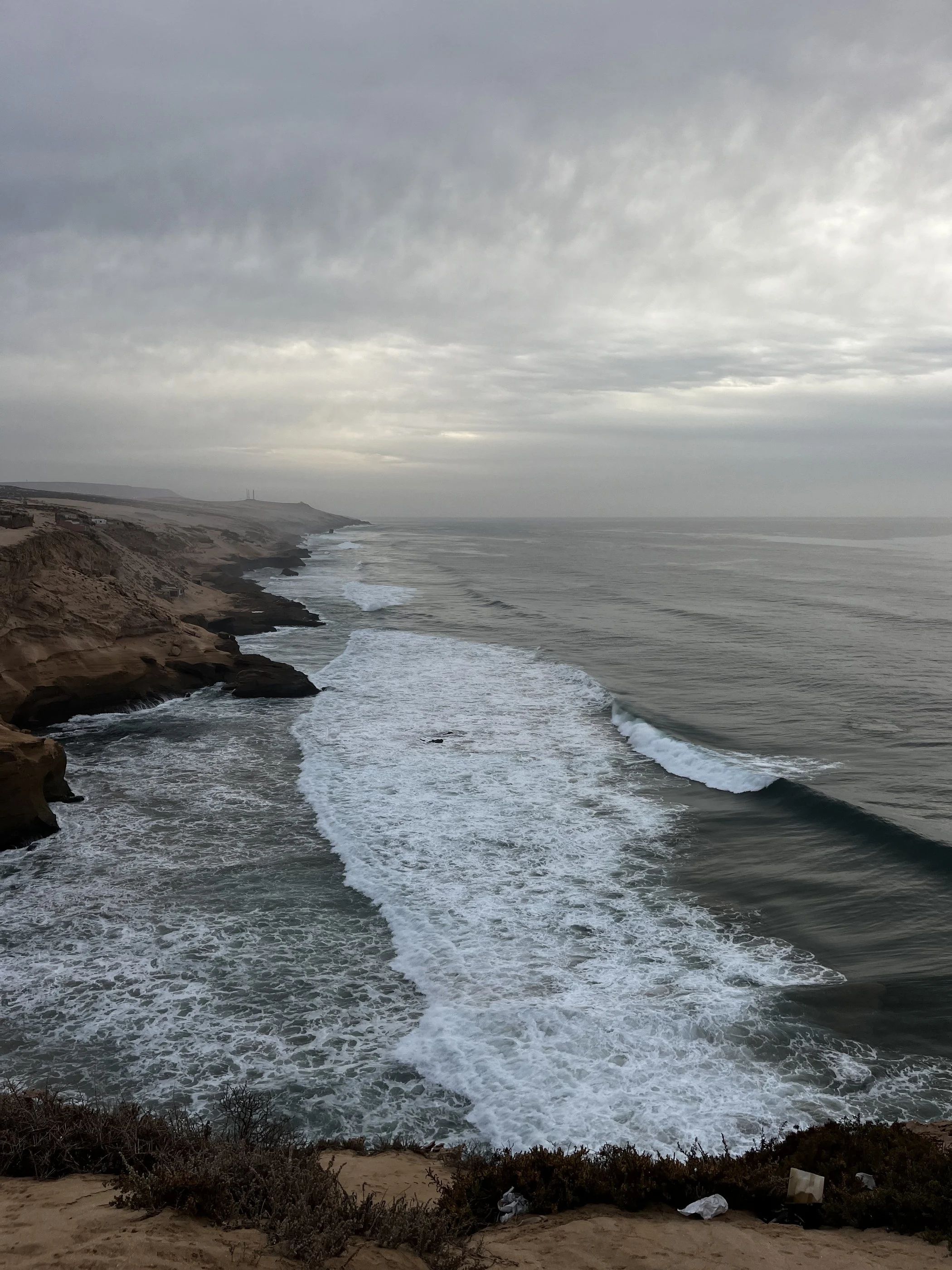
The coast around Tamraght and Taghazout faces west, but many of its points sit in bays that open more to the south. When a swell comes from the north-west, it wraps around the headlands and peels along the rock for a long way. That is why the point breaks need a decent swell to work at all, while the sandy beaches can have rideable waves on much smaller days.
Season by season
Autumn (September to November)
For many surfers this is the best season of the year. The first proper swells of the winter arrive, the water is still pleasant after the summer, and the village is calmer than in high summer. Beginners still find small days at the beach, and intermediate surfers get their first chances at the easier points.
Winter (December to February)
Winter is the main season for experienced surfers. Swells are bigger and more regular, and the points work on more days. Mornings are often clean, with light wind.
Beginners can still learn in winter. On big days the open beaches are too rough, but there are usually more sheltered spots nearby, and the coach knows which one will be manageable. The water is at its coolest, so you will want a full wetsuit.
Spring (March to May)
Spring is a good mix of everything. There is still swell, the days get longer and the weather on land warms up. Wind can play a bigger part, so mornings are usually the best time to be in the water. It is a good season for improvers who want variety.
Summer (June to August)
Summer is usually the smallest season for waves and the busiest season in the village, especially in July and August. The points are often flat, but the beaches get small, friendly waves that are good for learning. The water is at its warmest. The wind often picks up later in the day, so sessions tend to start early.
Wind: the other half of the story
Swell decides whether there are waves. Wind decides whether they are any good.
- Offshore wind blows from the land towards the sea. It holds the face of the wave up and makes it clean and smooth.
- Onshore wind blows from the sea onto the beach. It crumbles the waves and makes the water choppy and tiring to paddle through.
- No wind, often in the early morning, gives glassy conditions that are lovely for everyone.
On this coast mornings are often calmer than afternoons. That is one reason many lessons and guiding sessions start early.
Tide: why lesson times move
Each spot works best at a certain stage of the tide. Some beaches close out at high tide, when the waves break all at once on the shore. Some reefs become too shallow at low tide. A spot that is perfect at nine in the morning can be unsurfable at noon.
This is why lesson times change from day to day. We look at the swell, the wind and the tide together, then choose the beach and the time. You do not need to understand all of this before you come, but it helps to know why the meeting time on Tuesday is not the same as on Monday.
Reading a forecast, in two minutes
If you want to look at a forecast yourself, three numbers matter most:
- Wave height. How big the swell is out at sea. The beach we choose is often smaller and more sheltered than the number you see.
- Period. The time in seconds between two waves. A longer period means more powerful, more organised waves. Short periods mean weaker, messier waves.
- Wind direction and speed. Light or offshore is good; strong onshore is not.
You can see live values for Tamraght on our home page, in the “Today in Tamraght” section. They come from an open forecast model, so treat them as a guide rather than a promise.
What to wear in the water
The Atlantic here is cooler than many people expect from Morocco.
- Winter and spring: a full wetsuit, usually around 3/2 mm (3 mm on the body, 2 mm on the arms and legs). Some people like 4/3 mm in the coldest weeks.
- Late summer and early autumn: a thinner full suit or a shorty is often enough.
Wetsuits come with our lessons, so you do not need to bring one.
Crowds and prices
The village is busiest in summer and around European school holidays. Popular points can be crowded in winter, because that is when experienced surfers travel here. Beginners are rarely affected by crowds at the points, since lessons happen at beaches with plenty of space.
If you have flexible dates, the shoulder seasons (autumn and spring) often combine good waves, calmer village life and easier booking.
So when should you come?
- You have never surfed: whenever you can. There are learning waves most of the year.
- You stand up in the whitewash and want green waves: autumn or spring.
- You want the famous points: late autumn to early spring, and keep your dates a little flexible.
Still not sure? Message us on WhatsApp with your dates and your level, and we will tell you honestly what to expect. You can also read about surf lessons for beginners in Taghazout or compare Tamraght, Taghazout and Imsouane.